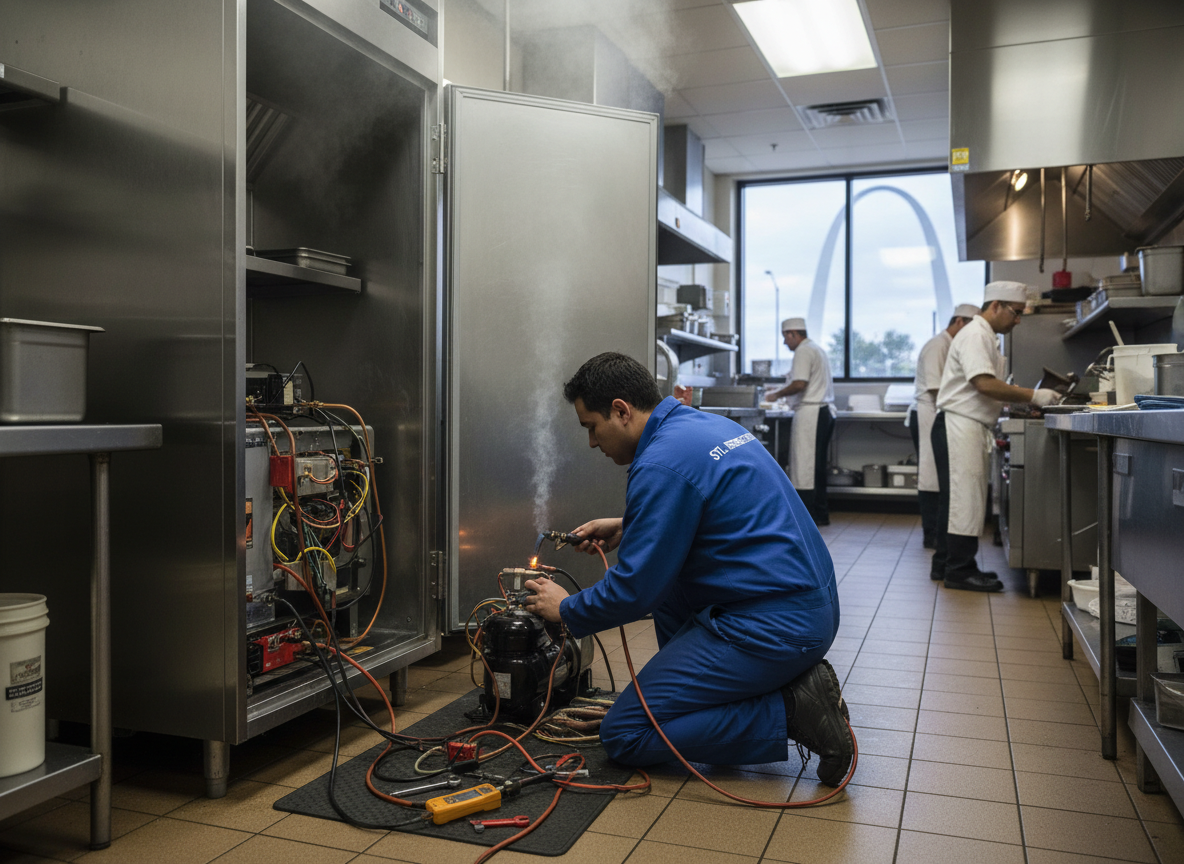
St. Louis summers push commercial refrigeration hard with high humidity and frequent severe storms that spike voltage or cut power, stressing compressors and control boards in units serving restaurants along The Hill or in Soulard. Older brick buildings common in Lafayette Square and Benton Park often have limited ventilation around walk-ins, causing condenser coils to run hotter and fail sooner than in newer suburban setups. Technicians see repeated issues with door gaskets degrading from constant temperature swings between humid outdoor air and cold interiors, plus drain lines clogging from the mix of grease and condensation typical in high-volume kitchens downtown or near the Gateway Arch area.
Power fluctuations during winter storms or summer outages can damage start relays and capacitors on reach-ins and prep tables used by businesses in Shaw and Forest Park Southeast. Many commercial kitchens in Midtown and Carondelet still operate equipment from the 1990s and early 2000s that requires specific OEM parts rather than generic replacements. Technicians routinely check for refrigerant leaks at flare fittings and Schrader valves that loosen from vibration on uneven floors in historic structures, and they verify proper defrost cycles because missed cycles lead to ice buildup that warps evaporator fans and raises energy use.
Local health department rules require quick temperature recovery after any service on units holding potentially hazardous foods, so repairs focus on restoring full capacity before the unit returns to service. Technicians carry manifold gauges, electronic leak detectors and manufacturer-specific software for brands common in University City and Clayton delis and bars. They also inspect condensate pumps and evaporator drains because heavy rainfall can overwhelm floor drains near the Missouri Botanical Garden corridor and back up into equipment.
Seasonal Storm Impact
Frequent severe storms in the humid continental climate create sudden power surges that shorten compressor life on commercial units in Tower Grove South and Delmar Loop kitchens. Technicians recommend surge protection and regular coil cleaning after storm season to prevent repeat failures.
Technician insight
In St. Louis the thing that catches most people out with Commercial Refrigerator Repair is how summer humidity and sudden storm outages combine to kill compressors in older walk-ins common in Soulard and The Hill buildings; the power flickers during July storms often take out the start components before the owner even notices temperature drift.
The Hill Restaurant Walk-In Failure
A prep cooler in a restaurant on The Hill stopped holding temperature after a late-night storm. Inspection found a failed start relay and leaking Schrader valve from vibration on the uneven original floor. The relay and valve were replaced, system recharged and defrost timer reset, restoring safe temperatures before morning service.
How it works
- 1
On-Site Assessment
Technician arrives within hours, checks power supply, temperature logs and visible damage on the unit at the St. Louis location.
- 2
Component Diagnosis
Full testing of compressor, fans, defrost system, seals and controls using manufacturer procedures suited to local voltage conditions.
- 3
Repair Execution
Replace or rebuild faulty parts, recharge refrigerant if needed, and confirm proper operation under load before leaving the site.
- 4
Final Verification
Document temperatures, cycle times and any code notes, then provide the business owner with maintenance guidance for the next storm season.
Pricing
Upfront quotes based on model, age and specific failure; emergency after-hours calls carry a trip fee.