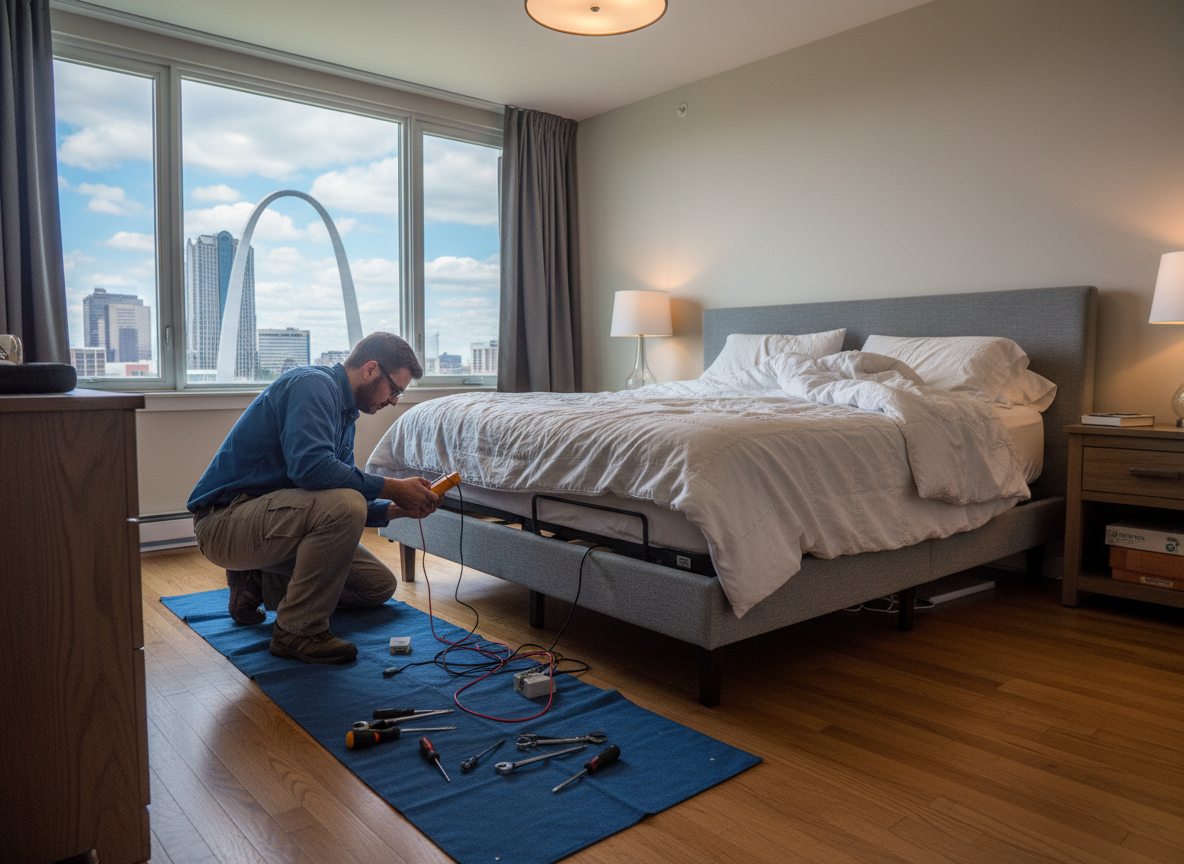
St. Louis homes in neighborhoods like Soulard and Lafayette Square often feature 19th-century brick construction with narrow window openings and knob-and-tube wiring remnants. These conditions make window air conditioner repairs more involved because units must be sealed against humid continental summers while avoiding damage to original sashes. Frequent severe storms bring power surges that fry compressor capacitors and control boards on portable units kept in upstairs bedrooms. Technicians at SkillArbor carry OEM capacitors and surge-protected replacements suited to the 120-volt circuits common in these properties.
Cold winters in the Independent City push residents in Tower Grove South and Benton Park to rely on electric space heaters and baseboard units. Dust accumulation from coal-era chimneys combines with high indoor humidity to corrode heating elements faster than in drier climates. When a bedroom heater fails mid-January, the job frequently includes checking shared circuits that also serve bathroom GFCIs, a layout typical in Shaw and Forest Park Southeast two-flats. Proper diagnosis prevents repeated trips when the first cold snap after a storm overloads an already stressed panel.
Delmar Loop and Midtown apartments converted from commercial buildings present different constraints: low ceilings limit ceiling-fan motor access and shared laundry rooms create voltage drop on long runs. Repair calls here often involve replacing sleeve bearings on older Hunter or Casablanca fans rather than full motor swaps. Homeowners in these buildings also request dehumidifier repairs tied to bedroom AC use because summer humidity routinely exceeds 70 percent, promoting mold around window seals if condensate lines clog.
Service from the Gravois Avenue base allows quick response to Carondelet and Downtown calls where parking and alley access affect job time. All work begins with a visual inspection of the appliance cord and outlet polarity before any disassembly, a step that catches many 1970s-era two-prong outlets still present in University City and Webster Groves rentals near the city line.
Technician insight
In St. Louis, the thing that catches most people out with Bedroom Appliance Repair is the interaction between 100-year-old knob-and-tube wiring and modern window AC compressors during July humidity spikes. A unit that worked fine in Clayton will trip breakers in a Soulard row house because the shared neutral has high resistance after decades of thermal cycling from our cold winters and severe storms.
Window AC Failure in a Benton Park Two-Flat
A window unit in an upstairs bedroom stopped cooling after a June thunderstorm. Inspection showed a failed run capacitor and corroded contacts from condensate backup. The tech replaced the capacitor and cleaned the drain path, restoring full function without removing the original sash. The homeowner avoided a full unit replacement and the bedroom stayed comfortable through the rest of the humid season.
How it works
- 1
Initial Assessment
Arrive at the St. Louis address and document the specific bedroom appliance model, power supply type, and visible signs of storm or humidity damage.
- 2
Diagnostic Testing
Run load and continuity checks on motors, elements, and controls while noting any interaction with the home's aging electrical service.
- 3
Parts Sourcing and Repair
Source compatible components for common St. Louis units and complete the fix on site whenever possible.
- 4
Safety Verification
Test the repaired appliance under load, confirm proper grounding, and review usage notes tailored to local seasonal extremes.
- 5
Follow-Up Guidance
Provide the homeowner with a written summary and schedule any needed return visit before the next weather shift.
Pricing
Upfront quotes given after diagnosis; price varies with parts availability and access constraints common in older St. Louis buildings.